What is a dental implant?
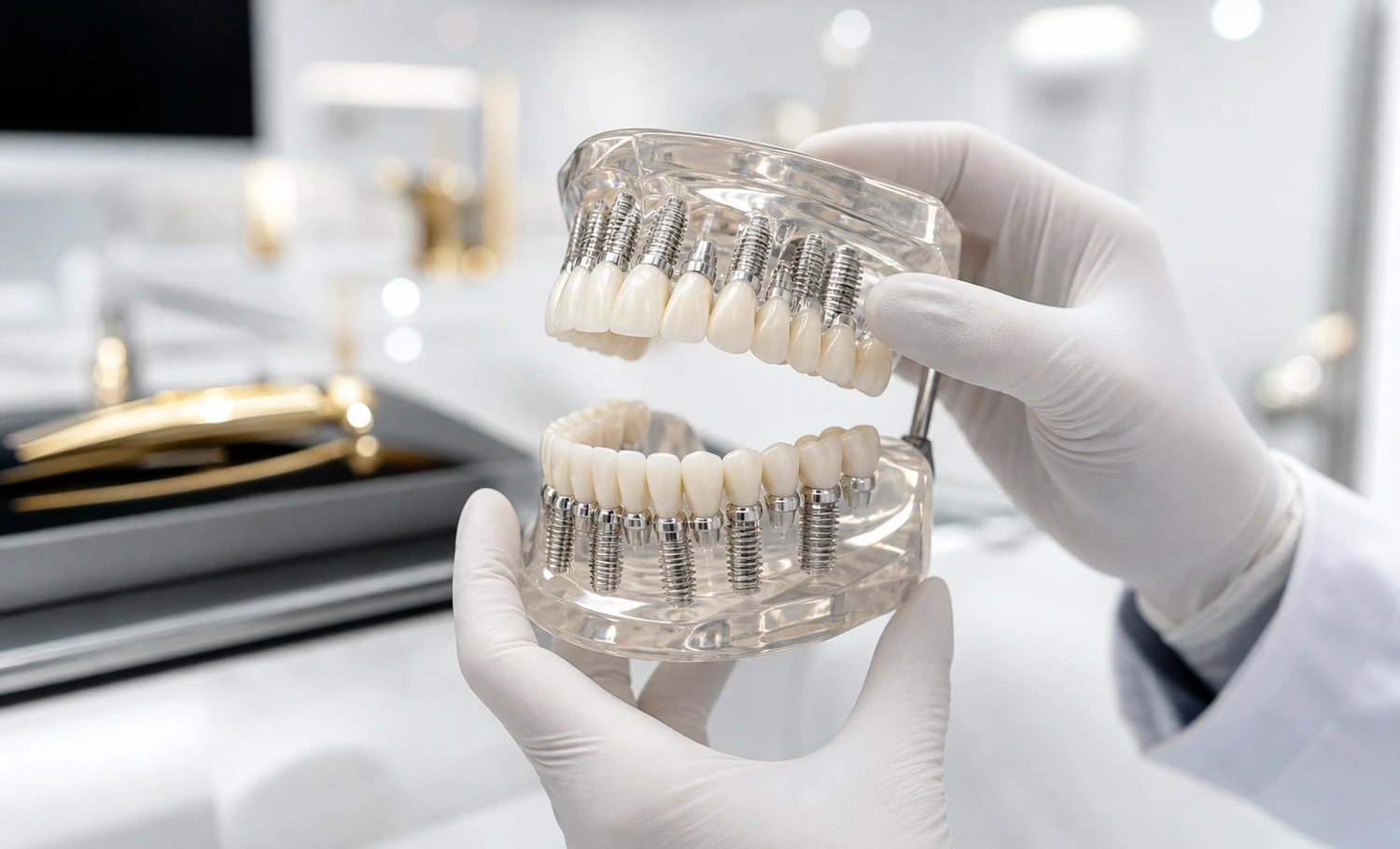
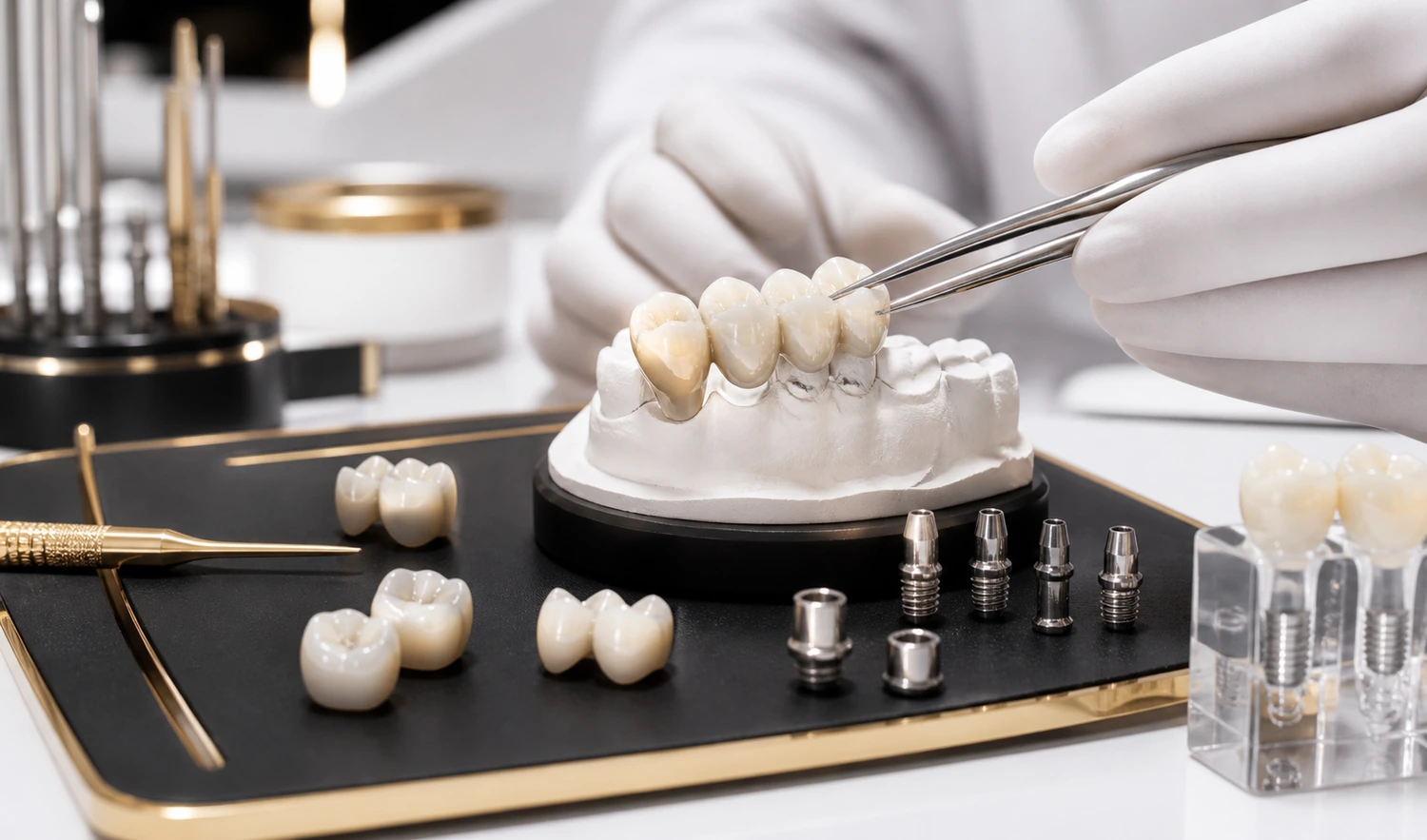
A dental implant is a fixture placed in the jaw to support a planned replacement tooth. Once it has integrated with the surrounding bone, it may support a single crown, an implant-supported bridge or a wider full-arch restoration. The visible tooth is only one part of the result: the implant, the connecting component and the final restoration must be planned together.
Implants are one option for missing teeth replacement, not an automatic answer for every gap. A removable denture, conventional bridge or another restorative approach may sometimes be more appropriate. The decision depends on the number and position of missing teeth, the condition of neighbouring teeth and the patient's priorities.
Who may be suitable?
Suitability depends on healthy or manageable gums, adequate bone in the intended area, oral hygiene, bite forces, medical history and the ability to attend reviews. Smoking, uncontrolled health conditions and active gum disease can affect planning and healing. Age alone is not the deciding factor.
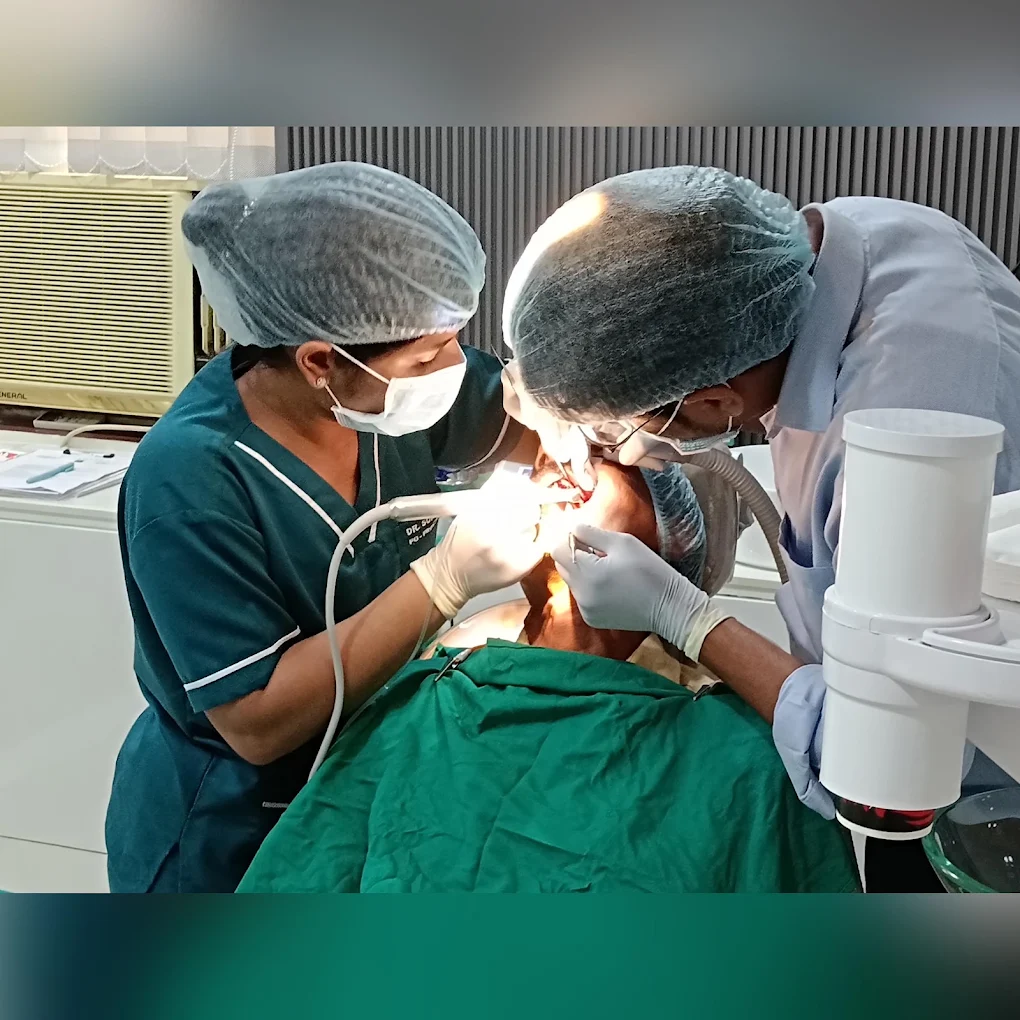
A consultation usually includes an oral examination and appropriate imaging. The dentist also considers the future crown or bridge: placing an implant without first planning the final tooth can lead to avoidable restorative compromises. Read more about factors that influence implant candidacy.
What are the main treatment stages?
- Assessment: symptoms, medical history, gums, bite, remaining teeth and available bone are reviewed.
- Planning: the position of the implant and the intended restoration are considered together.
- Placement: the implant is placed when the site is suitable. Additional procedures may be recommended in some cases.
- Healing: time is allowed for tissues and bone to heal. A temporary tooth may be discussed where clinically appropriate.
- Restoration: records are taken for the crown, bridge or prosthesis, followed by fitting and bite checks.
The sequence varies considerably. An implant placed into a healed site may follow a different pathway from treatment after an extraction, bone graft or wider rehabilitation. Our guide to the dental implant treatment timeline explains this variability.
Healing and the final restoration
Healing is a biological process and cannot be reduced to one fixed schedule. Gum condition, bone quality, implant location, medical factors and any additional procedure influence timing. The final restoration also requires careful attention to contacts, bite, appearance and access for cleaning.
Temporary restorations have limits and must be used exactly as advised. Contact the clinic if a temporary component feels loose, the bite feels unusual or symptoms worsen. Do not assume that the absence of pain means every stage is complete.
Maintenance after implant treatment
Implants do not develop tooth decay, but the surrounding gums and supporting bone can become inflamed. Daily brushing, appropriate interdental cleaning and periodic professional review remain essential. Maintenance appointments may include an assessment of gum health, bite, cleaning access and the restoration.
No implant can be promised to last forever. Long-term performance depends on diagnosis, treatment quality, health factors, daily care, habits and maintenance. Dentoveda provides dental implant treatment information for patients in West Delhi and individual recommendations after evaluation.
This article provides general dental information and is not a diagnosis or a substitute for examination by an appropriately qualified professional. Treatment recommendations and outcomes depend on individual clinical findings and medical history.