Two different ways to support a replacement tooth
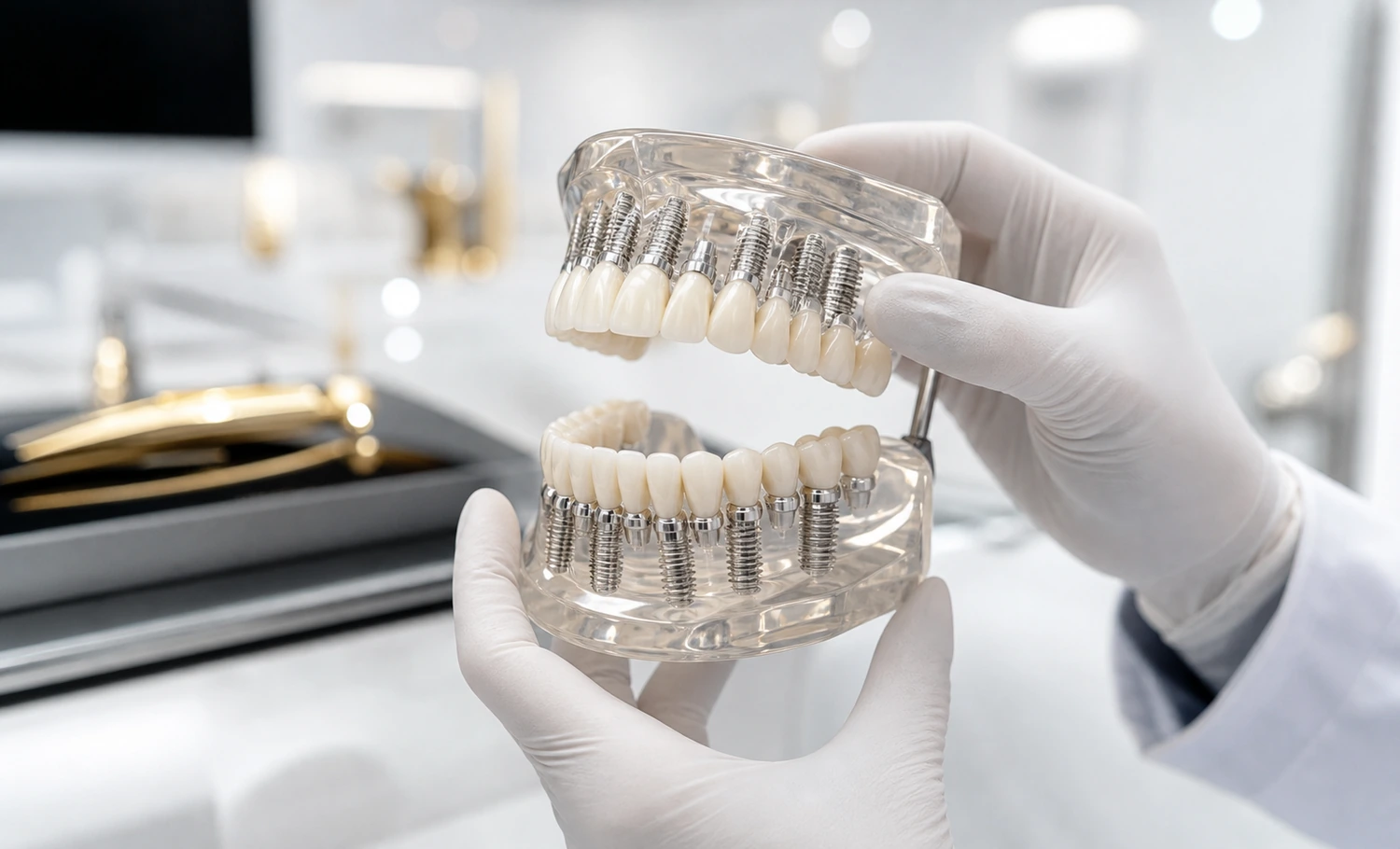
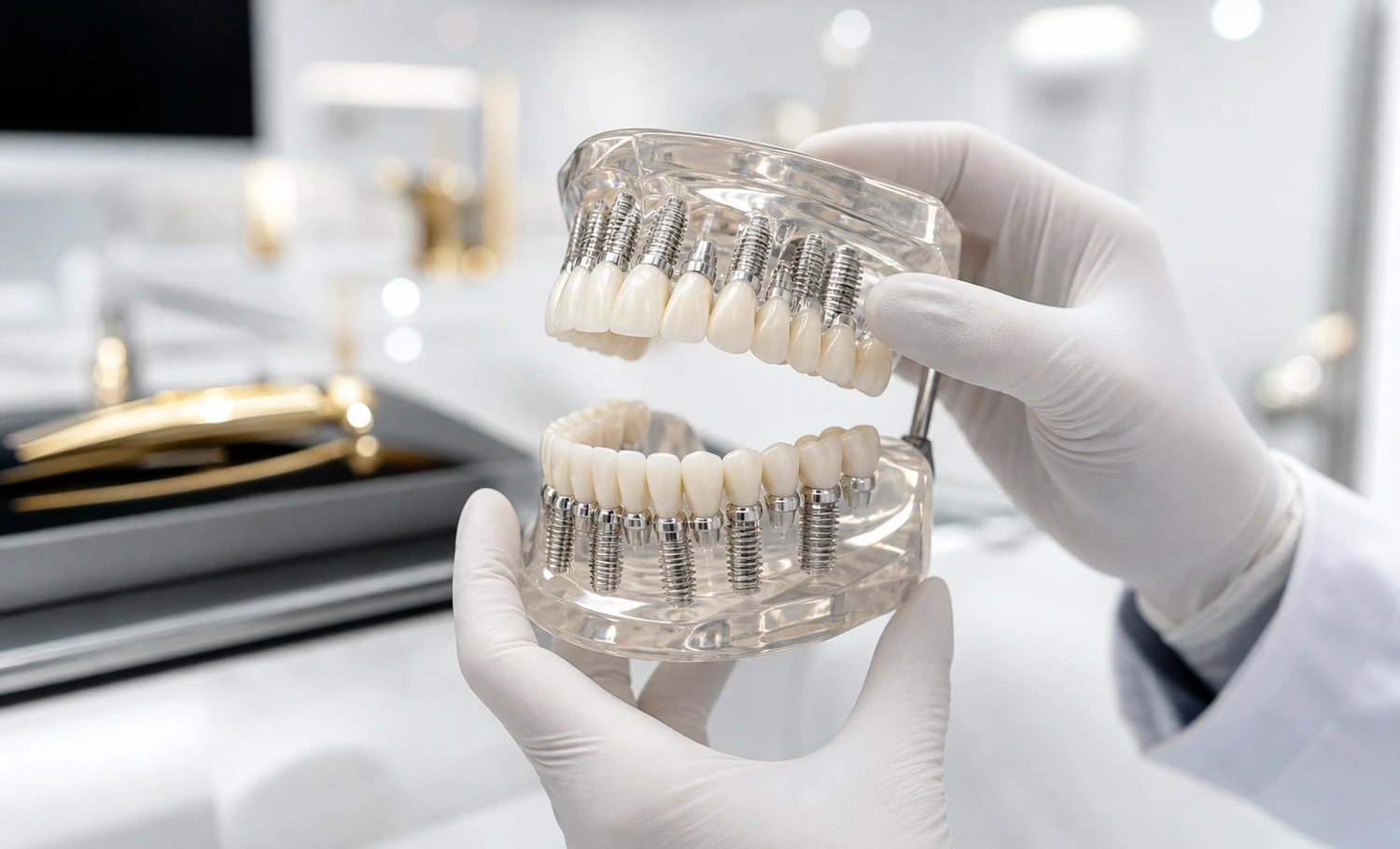
A conventional bridge uses neighbouring teeth as supports for a fixed replacement tooth. A dental implant uses a fixture in the jaw to support a crown or another restoration. Both can restore a gap, but their requirements, treatment stages and maintenance differ.
Effect on neighbouring teeth
A conventional bridge usually requires preparation of supporting teeth. This may be reasonable when those teeth already need substantial restorations. An implant can replace a tooth without using its neighbours as bridge supports, but it requires a suitable implant site and a surgical stage.
Bone, gums and treatment time
Implant planning considers bone volume, gum health, medical history and healing. A bridge depends on the strength, position and long-term outlook of supporting teeth. Bridge treatment may involve fewer biological healing stages, while implant treatment commonly extends over placement, healing and restoration.
Cleaning and maintenance
Both options need effective daily cleaning. A bridge requires cleaning beneath the replacement tooth and around its supporting teeth. An implant crown requires care around the implant and gum margin. Neither option is maintenance-free, and neither can be guaranteed for life.
Which option is better?
There is no universal winner. The condition of adjacent teeth, bone and gums, the size of the space, bite, health factors, time and patient preference all matter. Sometimes a removable option also deserves consideration. Review the fundamentals in our guide to replacing missing teeth with implants and discuss individual findings with a dentist.
This article provides general dental information and is not a diagnosis or a substitute for examination by an appropriately qualified professional. Treatment recommendations and outcomes depend on individual clinical findings and medical history.